|
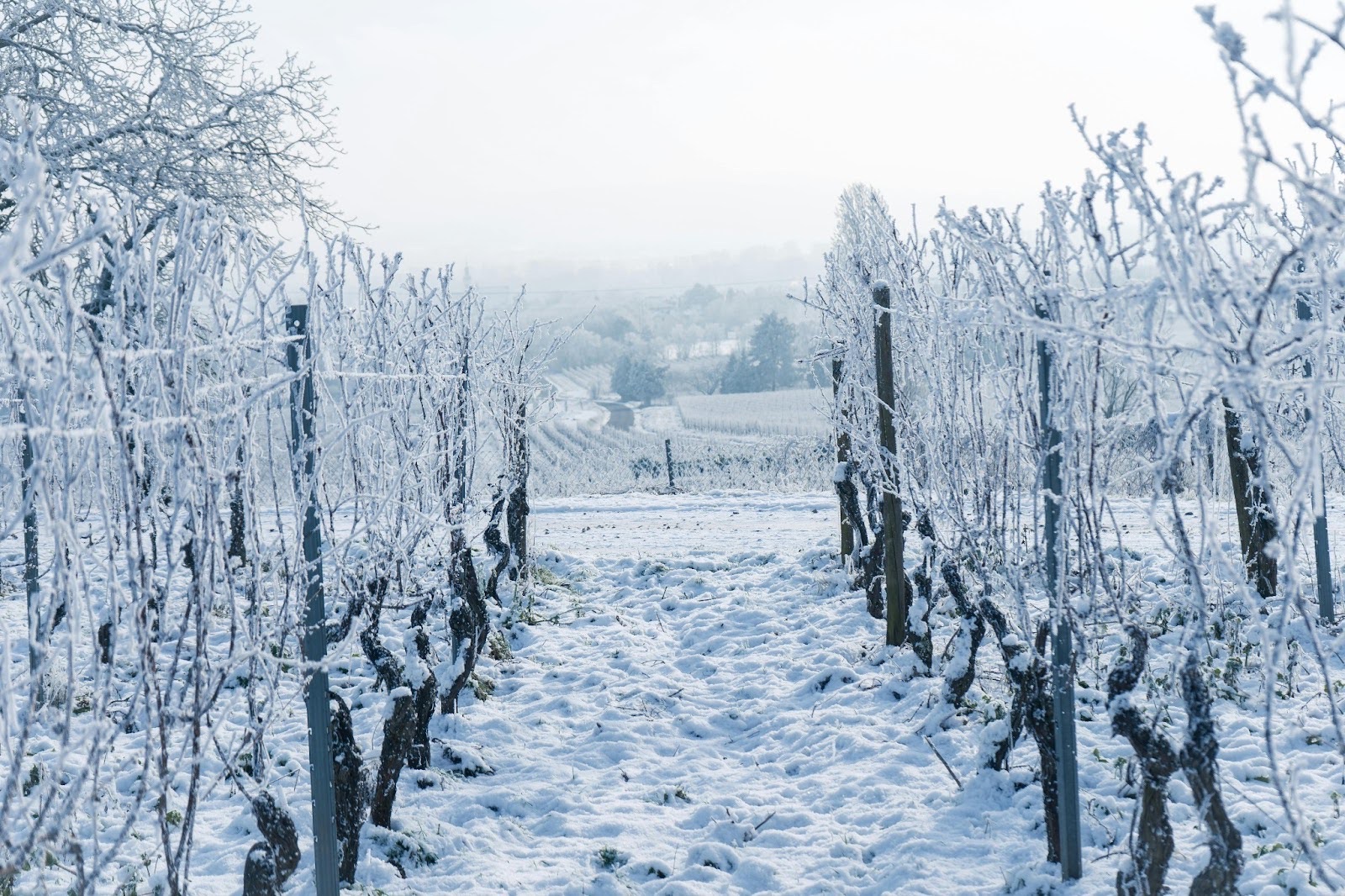
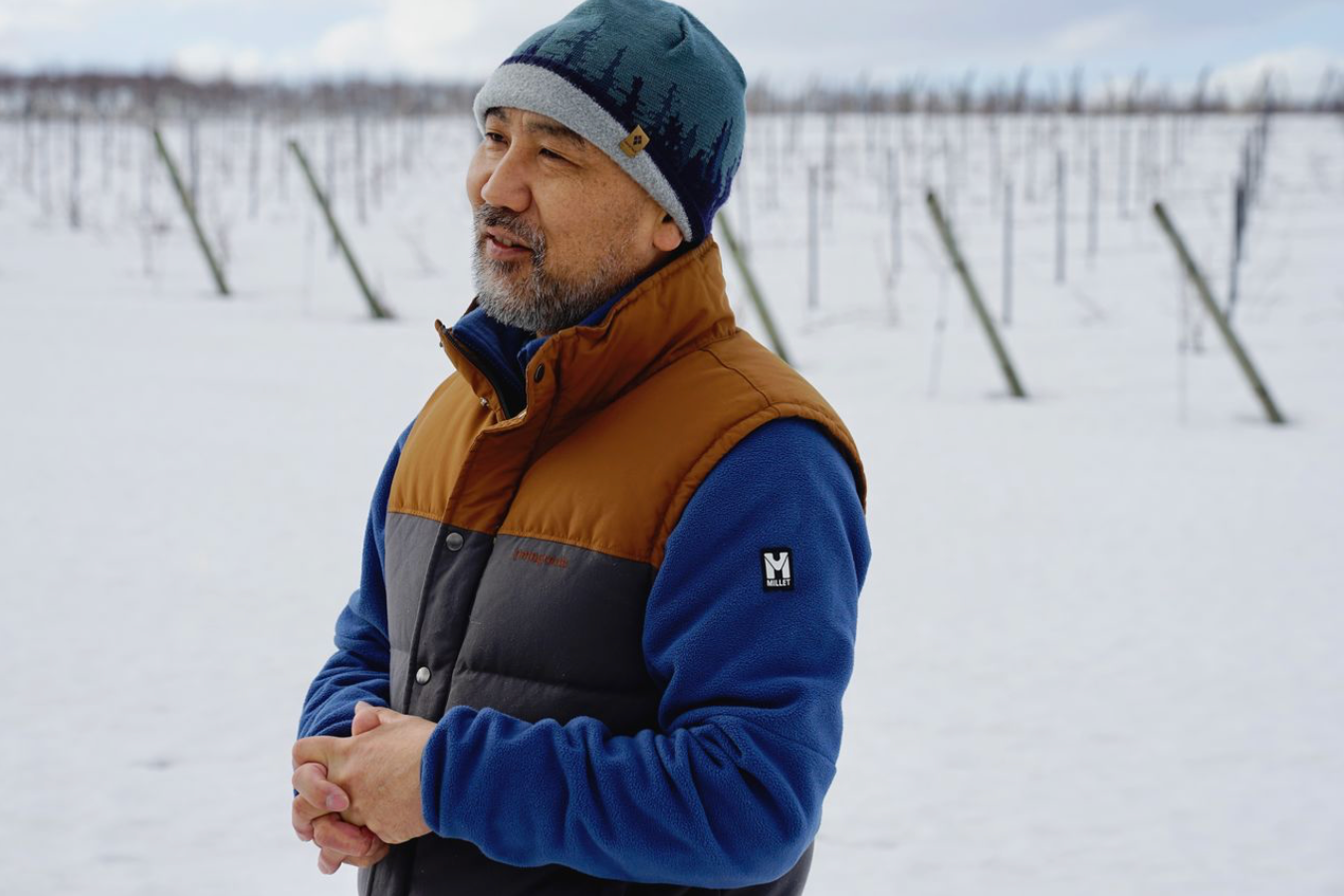
Soga Takahiko, Japan’s cultiest winemaker, in his snowy Hokkaido vineyard (© Ukita Yasuyuki)
Why Japan Felt Like a Reality Check
Many of the wines we tasted hovered around 12–12.5% alcohol, sometimes even lower. The growing season is long and moderate. Fruit is present, but it isn’t the headline.
More than once, people in our group (who drink a lot of Oregon Pinot Noir) smelled the wines and asked, “Is this off?” or “Is something wrong with it?”
Nothing was wrong. We were simply tasting wines shaped by a climate that is, by today’s standards, truly cool.
Instead of ripe cranberry and juicy pomegranate—aromas many of us associate with Willamette Valley Pinot Noir—we were getting wet leaves, forest floor and tart huckleberry. Confusing at first, but completely logical when viewed through the lens of a long, cool ripening season.
It was a reminder of how much our palates have adapted to riper styles, even when we still think of ourselves as lovers of “cool climate” wine.
So… Maybe It’s Time to Reframe
Language matters. And right now, the way we talk about climate in wine hasn’t quite caught up with reality.
Oregon and Burgundy are still cool relative to places like Bordeaux and Sonoma—which were long considered moderate but now feel much closer to warm. But Burgundy and Oregon themselves are warm when held up against regions like Japan.
That may mean rethinking what we call cool, moderate, and warm—especially as vineyards continue to be planted in places once considered “too cold,” like Japan, British Columbia, and southern Patagonia.
It also means winemakers are being forced to adapt. But Oregon, for once, has a leg up on Burgundy…
In Burgundy, the vineyards identified centuries ago as the best—the Grand and Premier Cru sites—were prized because they were the warmest places where grapes could reliably ripen. Today, those sites are now becoming too warm. But stepping away from them isn’t just a stylistic choice; it’s a financial one. Those classifications are baked into land values, reputations, and labels, so abandoning a Grand Cru vineyard in favor of a cooler, less celebrated site can mean walking away from generations of cultural and economic capital.
Oregon doesn’t carry that same historical weight. Without Grand or Premier Cru designations, producers have far more freedom to adapt. That’s why you’re seeing new vineyards planted higher up hillsides, farther west toward the Coast Range, and in cooler pockets with higher diurnal swing… sites where grapes can hang longer and ripen more slowly.
The climate is changing. Wine is changing with it. And if we want to keep understanding wine—not just drinking it—we need to update both our vocabulary and our expectations.
|